My 2026 in numbers

€2,234 on AI in 2026, and what it paid for

I spent €2,234 on AI tools between January and October. I've never spent this much on tools, and no tool has ever done this much for my work.

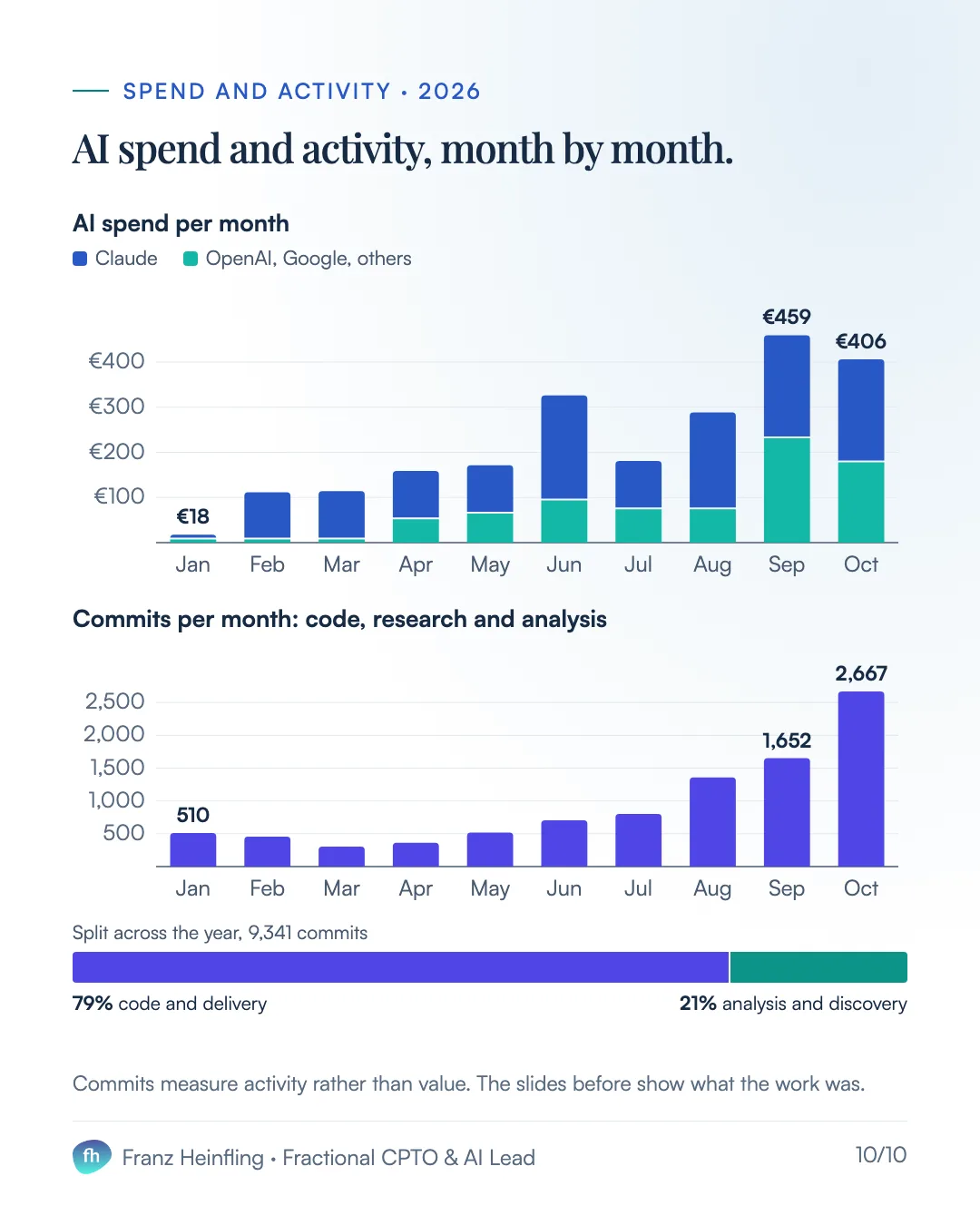
My AI bill went from €18 in January to €406 in October. In the same period my commits went from 510 to 2,667 a month. Commits measure activity rather than value, so the rest of this page is about the work itself.

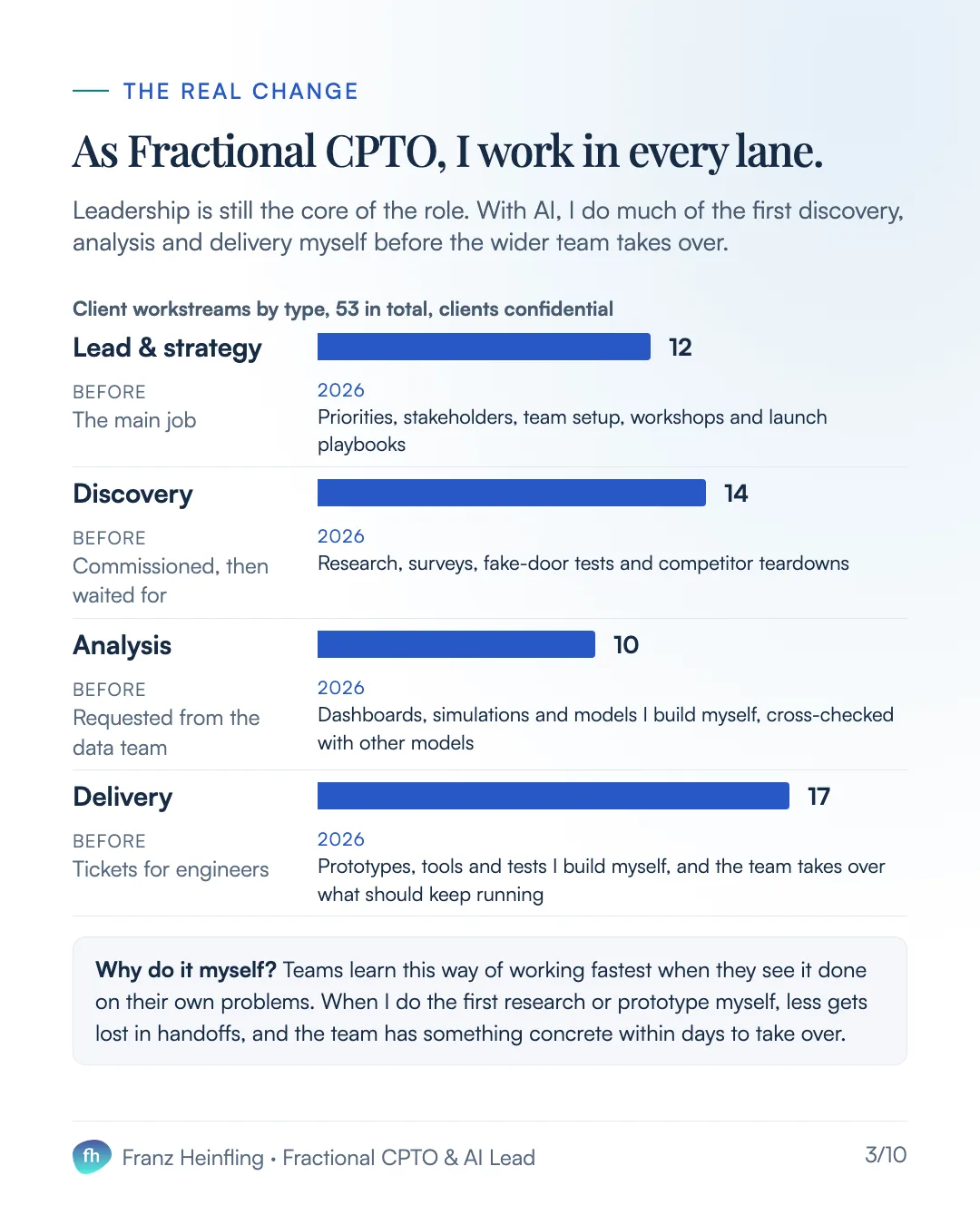
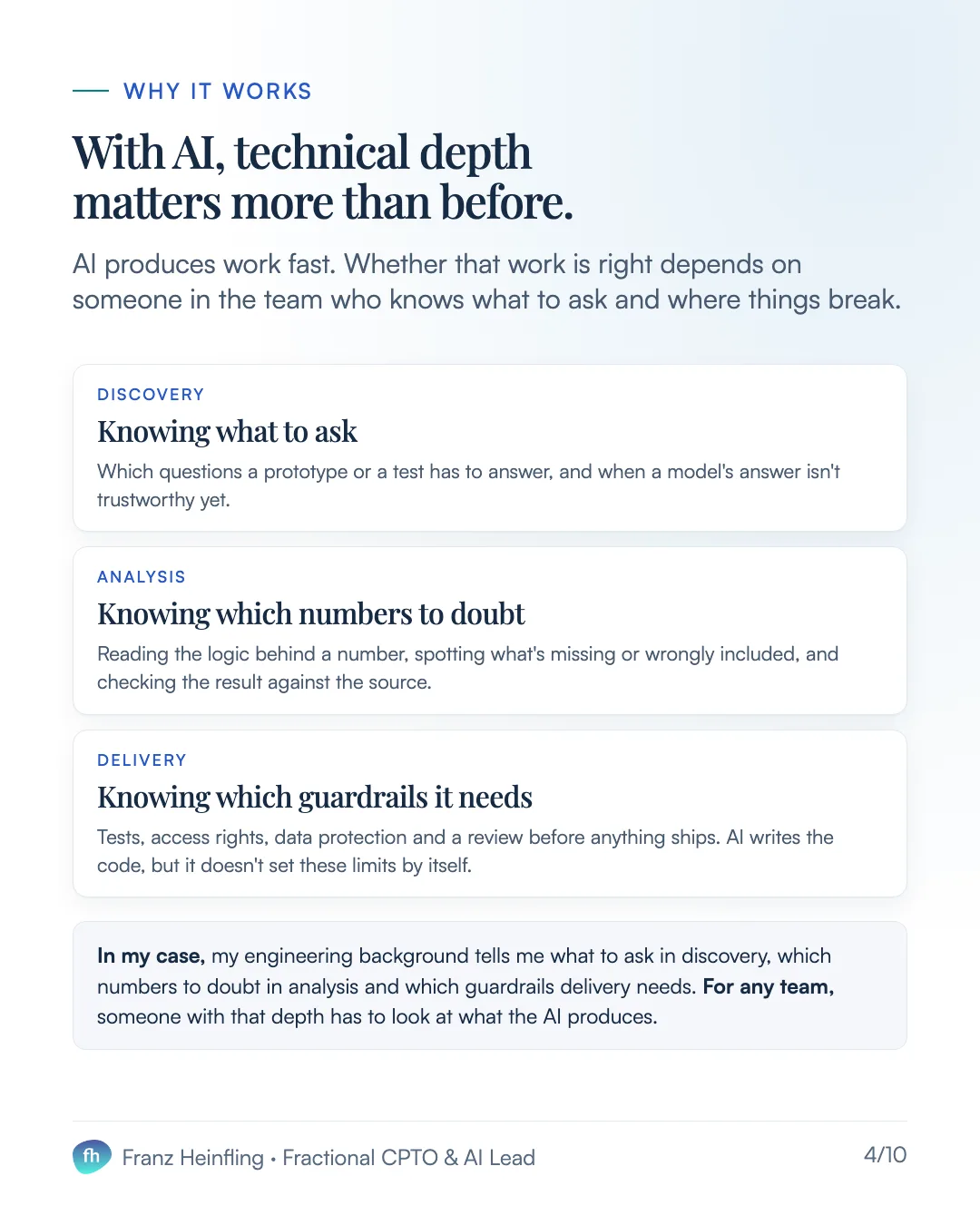
The biggest change is in my role. Leadership is still the core of being a Fractional CPTO, but AI now lets me do much of the first discovery, analysis and delivery myself before the wider team takes over. My engineering background tells me what to ask in discovery, which numbers to doubt in analysis and which guardrails delivery needs. That applies to any team using AI: technical depth matters more now than before.

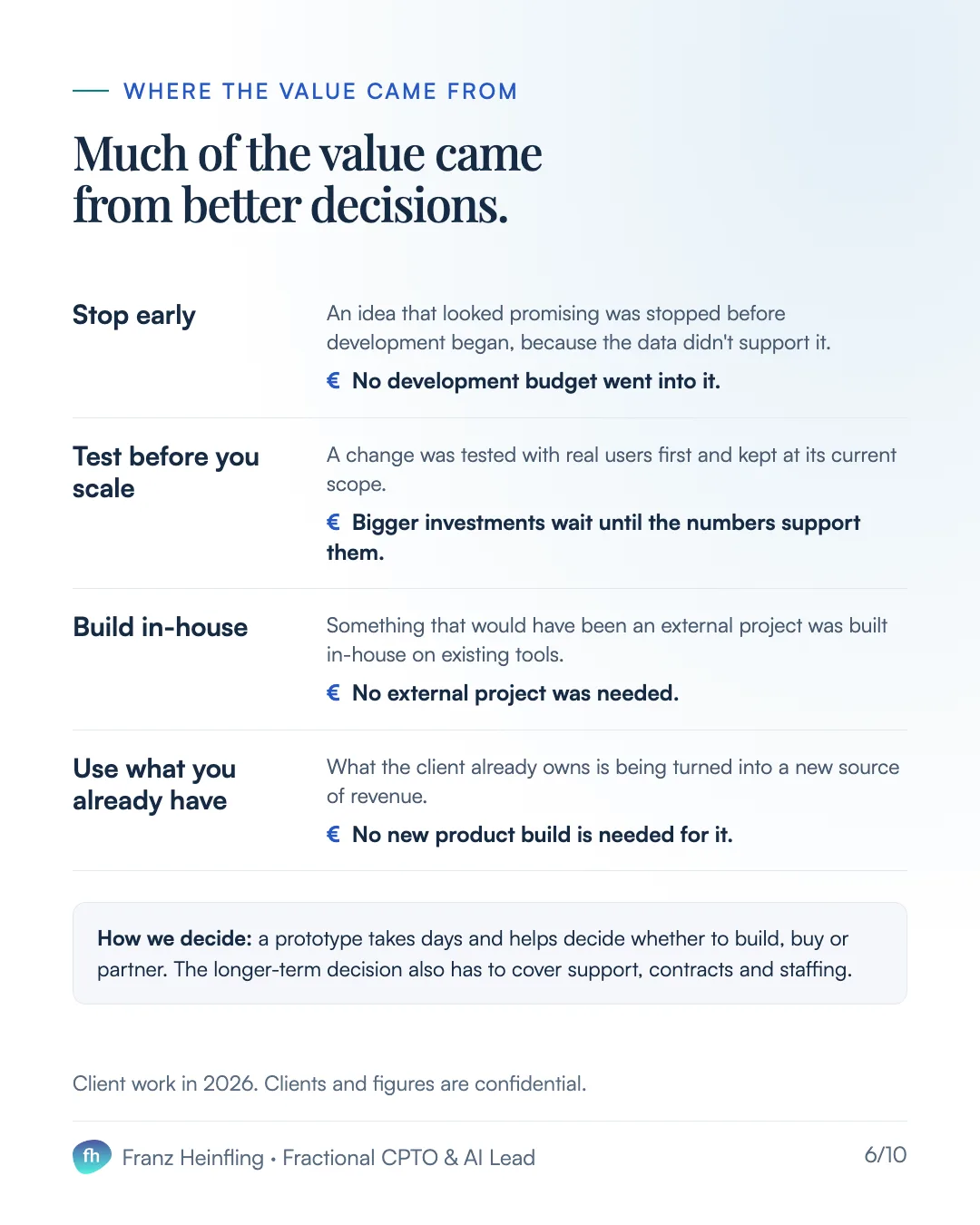
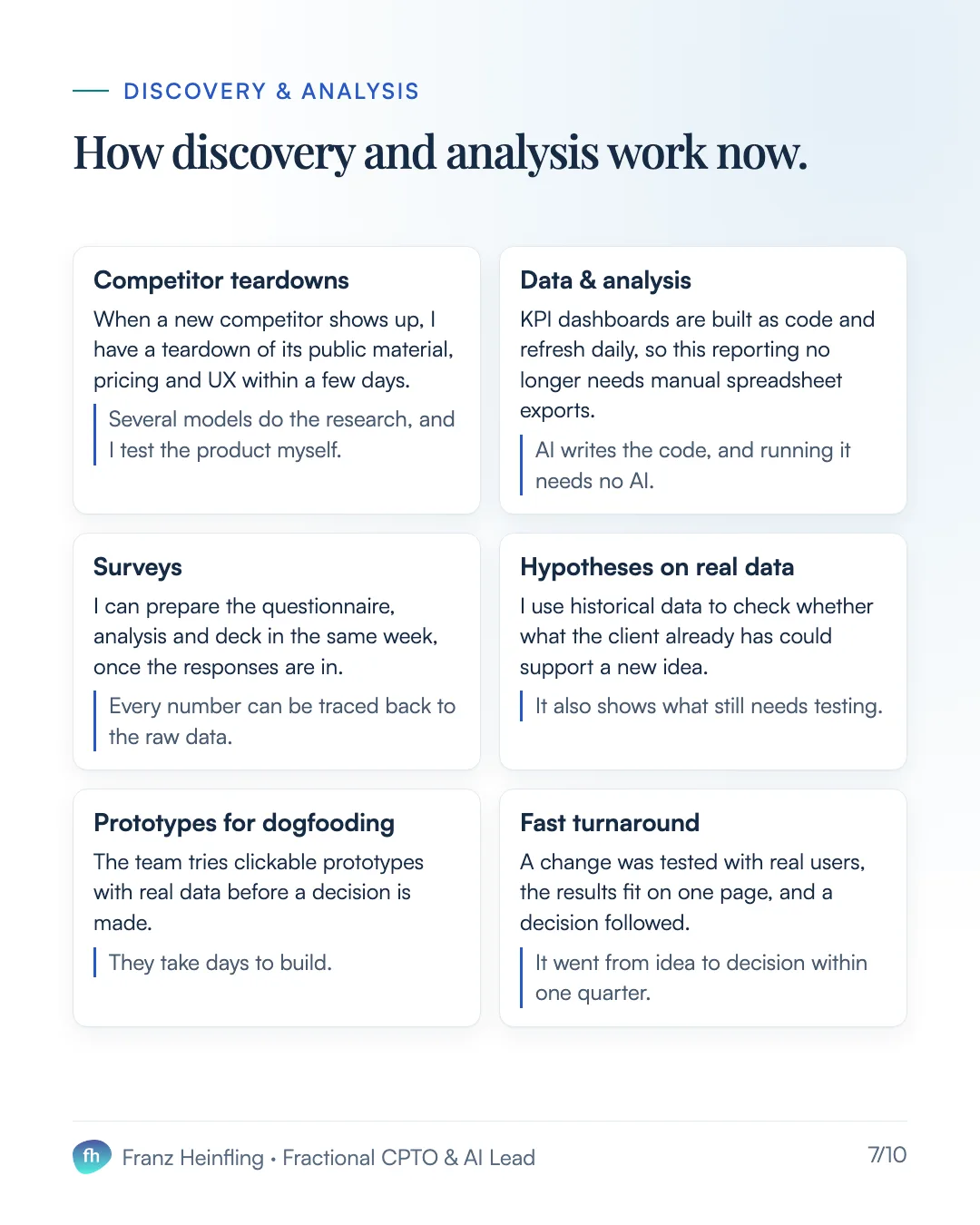
In client work, much of the effect showed up in decisions. We stopped a promising idea before development began, because the data didn't support it. We tested a change with real users before deciding how far to take it. Something that would have been an external project was built in-house on existing tools.

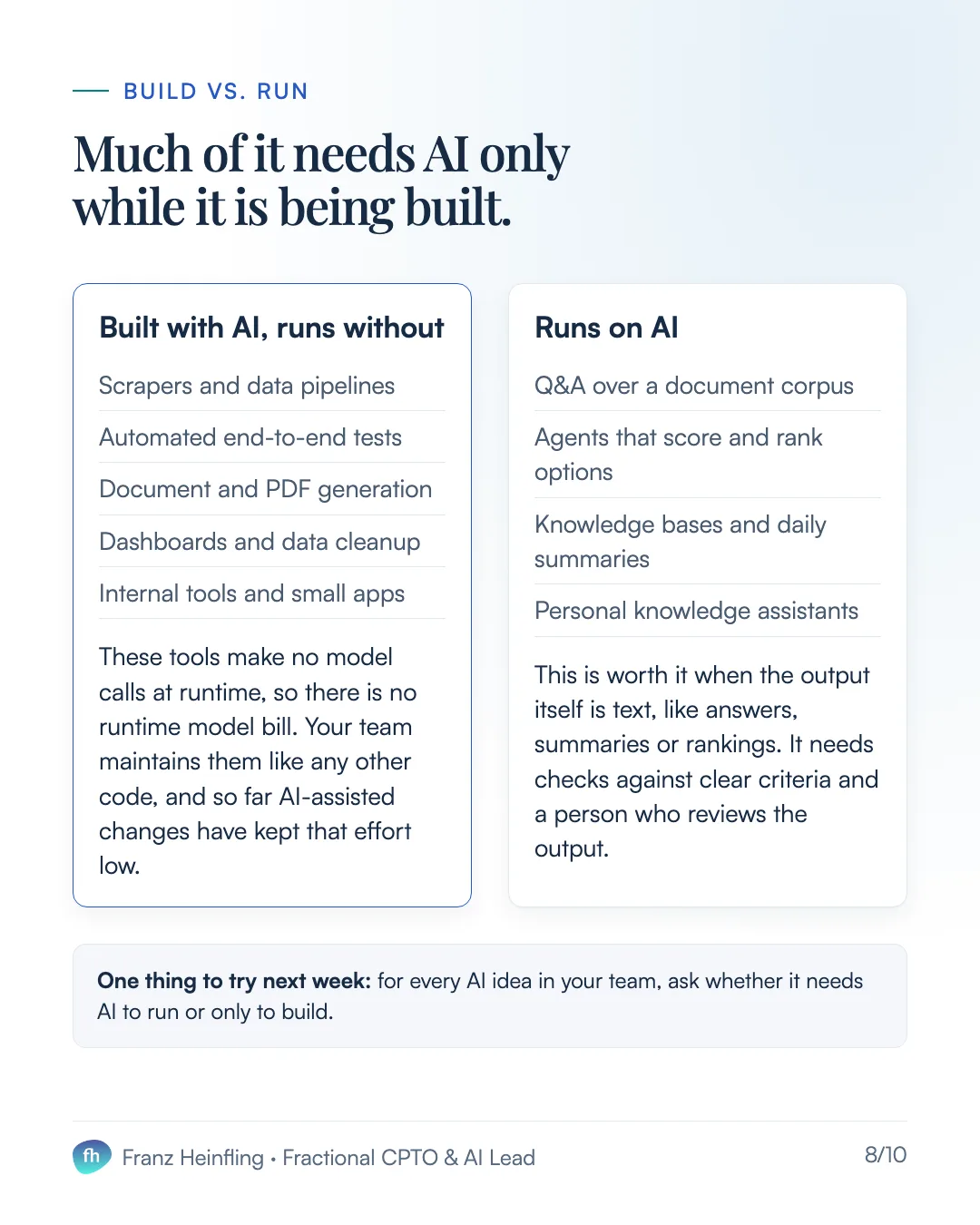
I used AI to build scrapers, data pipelines and automated tests, and none of them calls a model at runtime. If you try one thing next week, ask of every AI idea in your team whether it needs AI to run or only to build.
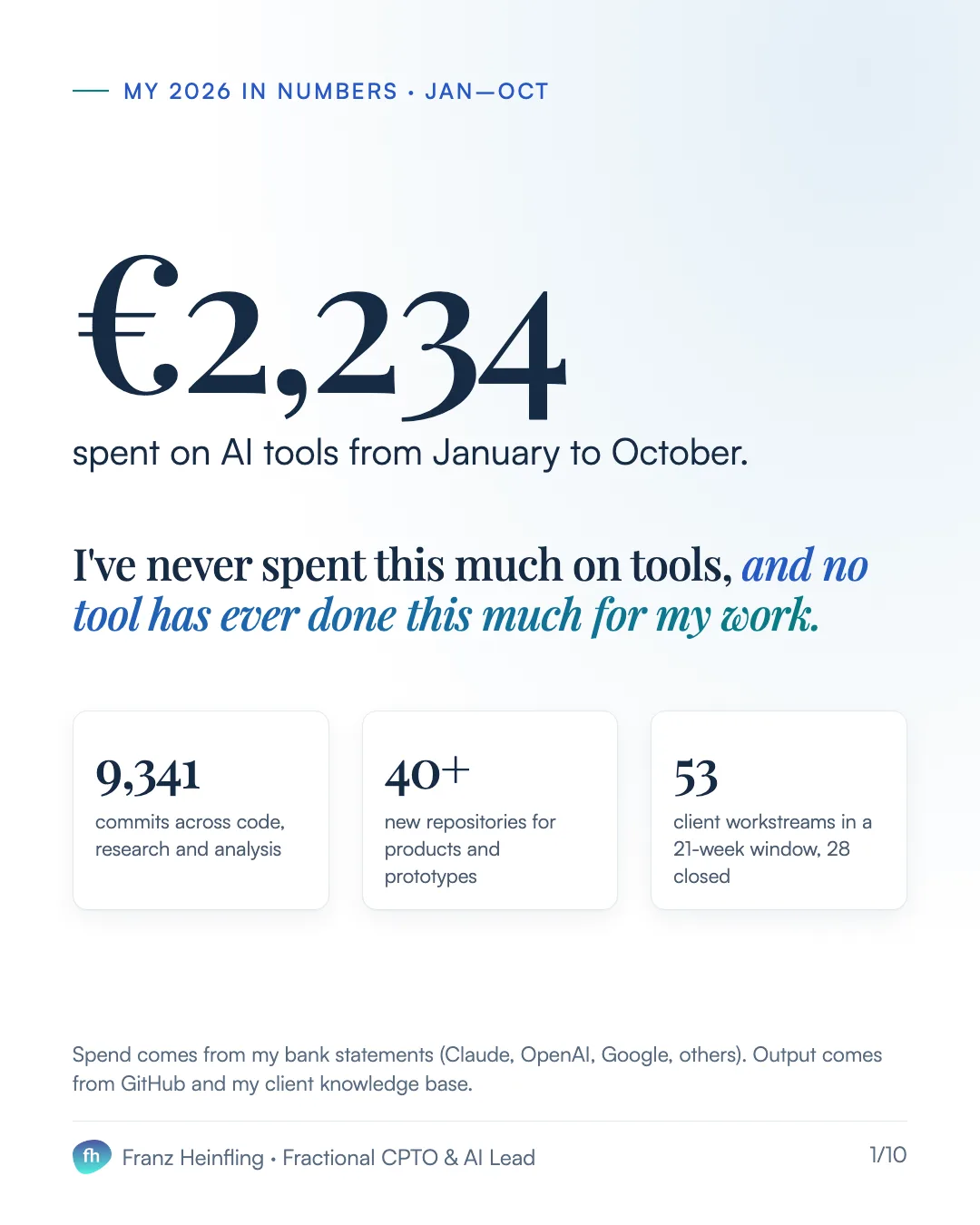
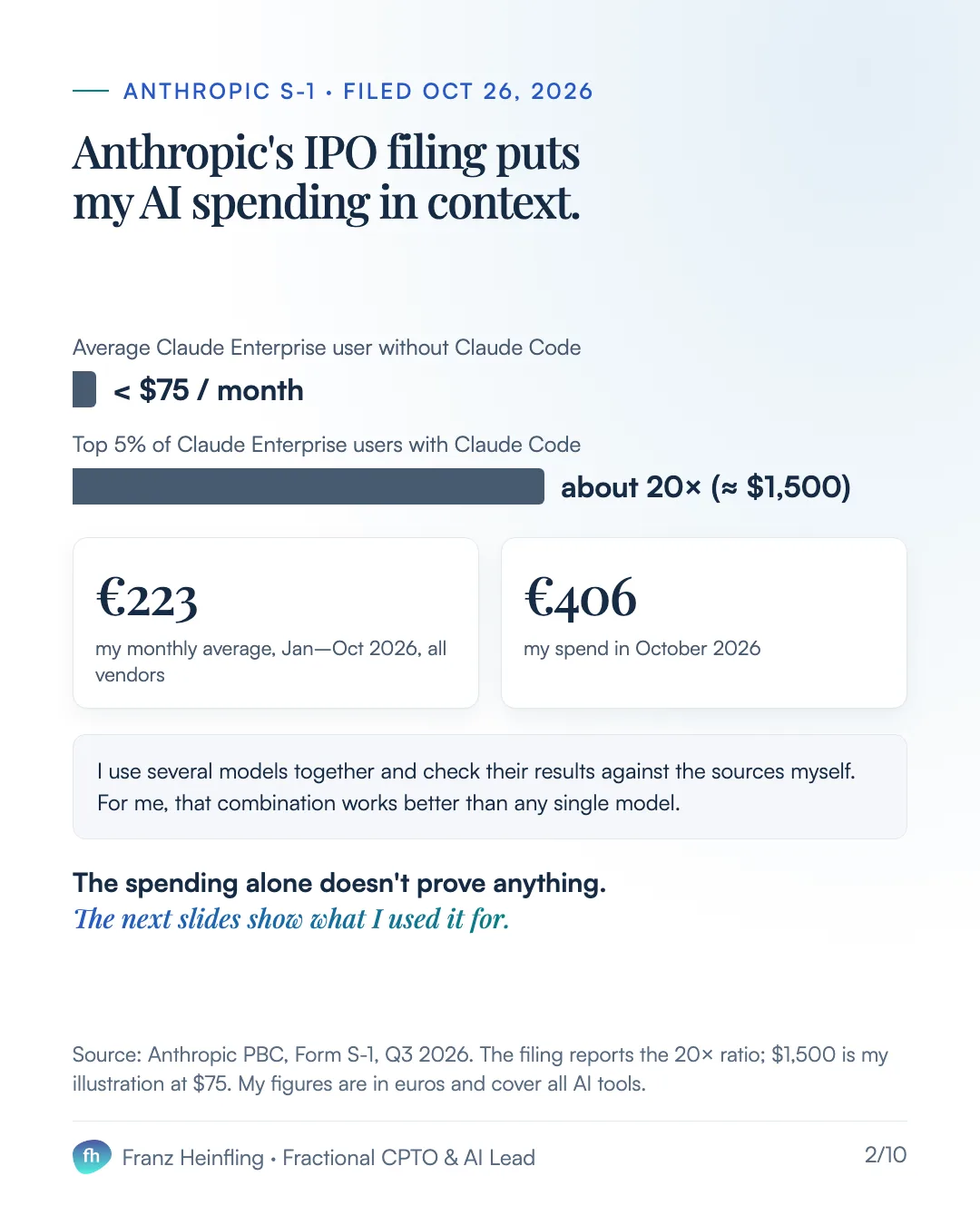
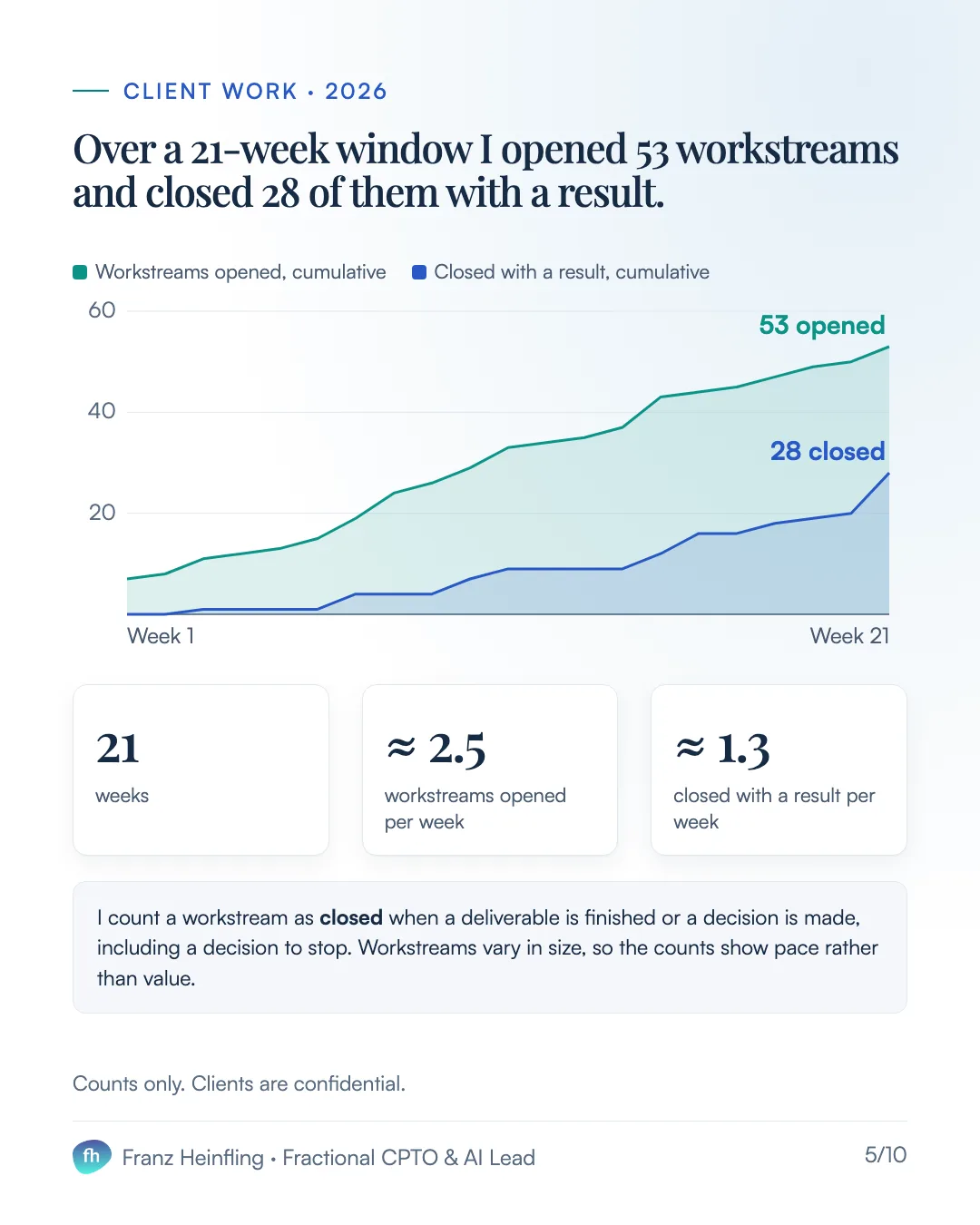
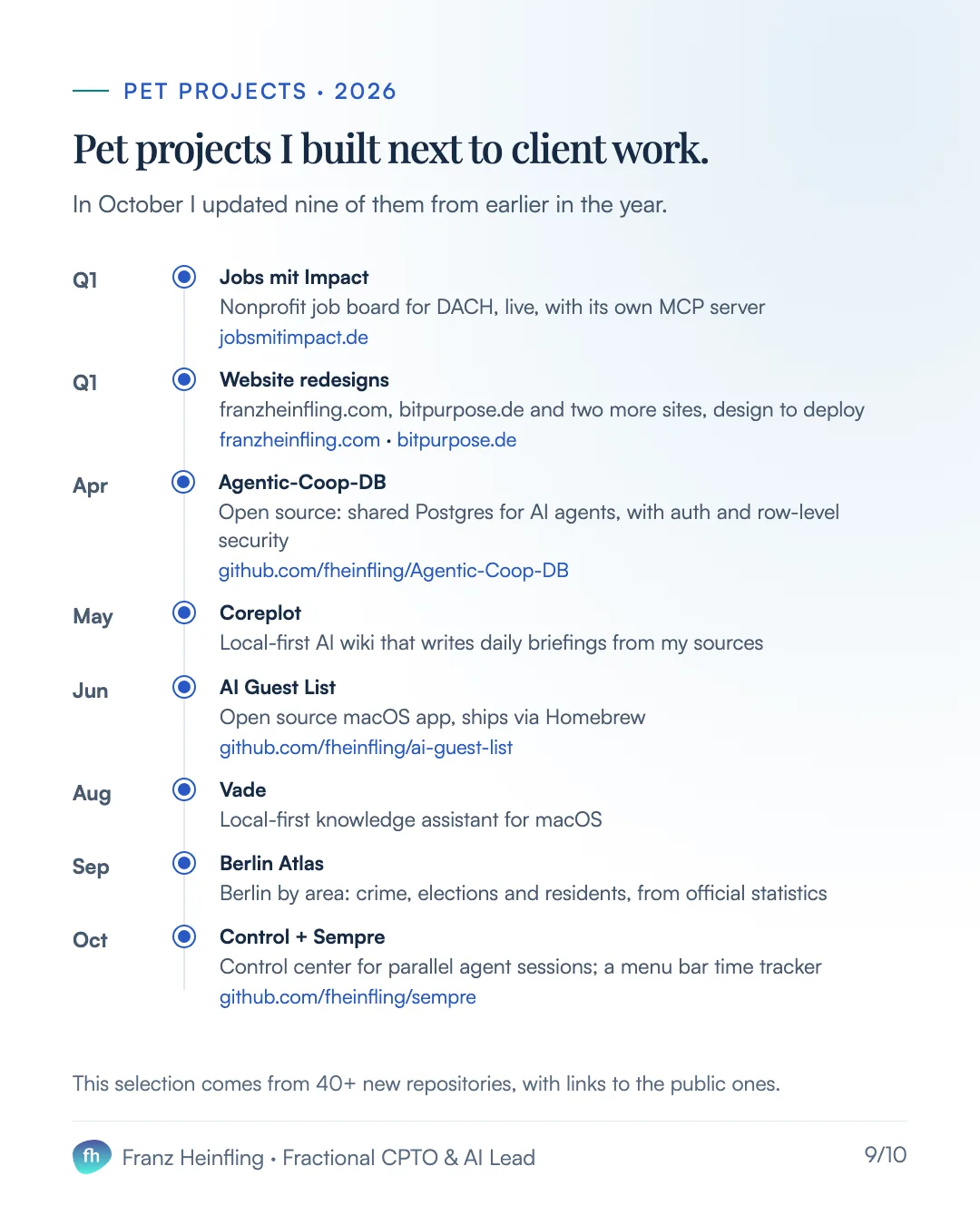
My 2026 in numbers · Jan–Oct €2,234 spent on AI tools from January to October. I've never spent this much on tools, and no tool has ever done this much for my work. 9,341 commits across code, research and analysis 40+ new repositories for products and prototypes 53 client workstreams in a 21-week window, 28 closed Spend comes from my bank statements (Claude, OpenAI, Google, others). Output comes from GitHub and my client knowledge base.Anthropic S-1 · filed Oct 26, 2026 Anthropic's IPO filing puts my AI spending in context. Average Claude Enterprise user without Claude Code Top 5% of Claude Enterprise users with Claude Code about 20× (≈ $1,500) €223 my monthly average, Jan–Oct 2026, all vendors €406 my spend in October 2026 I use several models together and check their results against the sources myself. For me, that combination works better than any single model. The spending alone doesn't prove anything. The next slides show what I used it for. Source: Anthropic PBC, Form S-1, Q3 2026. The filing reports the 20× ratio; $1,500 is my illustration at $75. My figures are in euros and cover all AI tools.The real change As Fractional CPTO, I work in every lane. Leadership is still the core of the role. With AI, I do much of the first discovery, analysis and delivery myself before the wider team takes over. Client workstreams by type, 53 in total, clients confidential Lead & strategy 12 Before The main job 2026 Priorities, stakeholders, team setup, workshops and launch playbooks Discovery 14 Before Commissioned, then waited for 2026 Research, surveys, fake-door tests and competitor teardowns Analysis 10 Before Requested from the data team 2026 Dashboards, simulations and models I build myself, cross-checked with other models Delivery 17 Before Tickets for engineers 2026 Prototypes, tools and tests I build myself, and the team takes over what should keep running Why do it myself? Teams learn this way of working fastest when they see it done on their own problems. When I do the first research or prototype myself, less gets lost in handoffs, and the team has something concrete within days to take over.Why it works With AI, technical depth matters more than before. AI produces work fast. Whether that work is right depends on someone in the team who knows what to ask and where things break. Discovery Knowing what to ask Which questions a prototype or a test has to answer, and when a model's answer isn't trustworthy yet. Analysis Knowing which numbers to doubt Reading the logic behind a number, spotting what's missing or wrongly included, and checking the result against the source. Delivery Knowing which guardrails it needs Tests, access rights, data protection and a review before anything ships. AI writes the code, but it doesn't set these limits by itself. In my case, my engineering background tells me what to ask in discovery, which numbers to doubt in analysis and which guardrails delivery needs. For any team, someone with that depth has to look at what the AI produces.Client work · 2026 Over a 21-week window I opened 53 workstreams and closed 28 of them with a result. Workstreams opened, cumulative Closed with a result, cumulative. Line chart over 21 weeks: workstreams opened rise steadily to 53, workstreams closed rise to 28. 21 weeks ≈ 2.5 workstreams opened per week ≈ 1.3 closed with a result per week I count a workstream as closed when a deliverable is finished or a decision is made, including a decision to stop. Workstreams vary in size, so the counts show pace rather than value. Counts only. Clients are confidential.Where the value came from Much of the value came from better decisions. Stop early An idea that looked promising was stopped before development began, because the data didn't support it. € No development budget went into it. Test before you scale A change was tested with real users first and kept at its current scope. € Bigger investments wait until the numbers support them. Build in-house Something that would have been an external project was built in-house on existing tools. € No external project was needed. Use what you already have What the client already owns is being turned into a new source of revenue. € No new product build is needed for it. How we decide: a prototype takes days and helps decide whether to build, buy or partner. The longer-term decision also has to cover support, contracts and staffing. Client work in 2026. Clients and figures are confidential.Discovery & analysis How discovery and analysis work now. Competitor teardowns When a new competitor shows up, I have a teardown of its public material, pricing and UX within a few days. Several models do the research, and I test the product myself. Data & analysis KPI dashboards are built as code and refresh daily, so this reporting no longer needs manual spreadsheet exports. AI writes the code, and running it needs no AI. Surveys I can prepare the questionnaire, analysis and deck in the same week, once the responses are in. Every number can be traced back to the raw data. Hypotheses on real data I use historical data to check whether what the client already has could support a new idea. It also shows what still needs testing. Prototypes for dogfooding The team tries clickable prototypes with real data before a decision is made. They take days to build. Fast turnaround A change was tested with real users, the results fit on one page, and a decision followed. It went from idea to decision within one quarter.Build vs. run Much of it needs AI only while it is being built. Built with AI, runs without Scrapers and data pipelines Automated end-to-end tests Document and PDF generation Dashboards and data cleanup Internal tools and small apps These tools make no model calls at runtime, so there is no runtime model bill. Your team maintains them like any other code, and so far AI-assisted changes have kept that effort low. Runs on AI Q&A over a document corpus Agents that score and rank options Knowledge bases and daily summaries Personal knowledge assistants This is worth it when the output itself is text, like answers, summaries or rankings. It needs checks against clear criteria and a person who reviews the output. One thing to try next week: for every AI idea in your team, ask whether it needs AI to run or only to build.Pet projects · 2026 Pet projects I built next to client work. In October I updated nine of them from earlier in the year. Q1 Jobs mit Impact Nonprofit job board for DACH, live, with its own MCP server jobsmitimpact.de Q1 Website redesigns franzheinfling.com, bitpurpose.de and two more sites, design to deploy franzheinfling.com · bitpurpose.de Apr Agentic-Coop-DB Open source: shared Postgres for AI agents, with auth and row-level security github.com/fheinfling/Agentic-Coop-DB May Coreplot Local-first AI wiki that writes daily briefings from my sources Jun AI Guest List Open source macOS app, ships via Homebrew github.com/fheinfling/ai-guest-list Aug Vade Local-first knowledge assistant for macOS Sep Berlin Atlas Berlin by area: crime, elections and residents, from official statistics Oct Control + Sempre Control center for parallel agent sessions; a menu bar time tracker github.com/fheinfling/sempre This selection comes from 40+ new repositories, with links to the public ones.Spend and activity · 2026 AI spend and activity, month by month. AI spend per month Claude OpenAI, Google, others. Bar chart: monthly AI spend rises from €18 in January to €459 in September and €406 in October. Commits per month: code, research and analysis. Bar chart: monthly commits rise from 510 in January to 1,652 in September and 2,667 in October. Split across the year, 9,341 commits 79% code and delivery 21% analysis and discovery Commits measure activity rather than value. The slides before show what the work was.

Download all slides as PDF

Spend comes from my bank statements (Claude, OpenAI, Google, others). Output comes from GitHub and my client knowledge base. Clients are confidential. Anthropic figures: Anthropic PBC, Form S-1, filed 26 October 2026.

If you're working on the same questions in your team, get in touch.