Onions to the rescue! Content and information keep growing, ad infinitum.
How did we deal with it so far? Skimming. But now that we have LLMs, why not drop some of that cognitive load?
The onion feed compresses information to its core. If you're interested in something, deep dive into the next layer: from core to key facts, points and details, all the way to the full text.
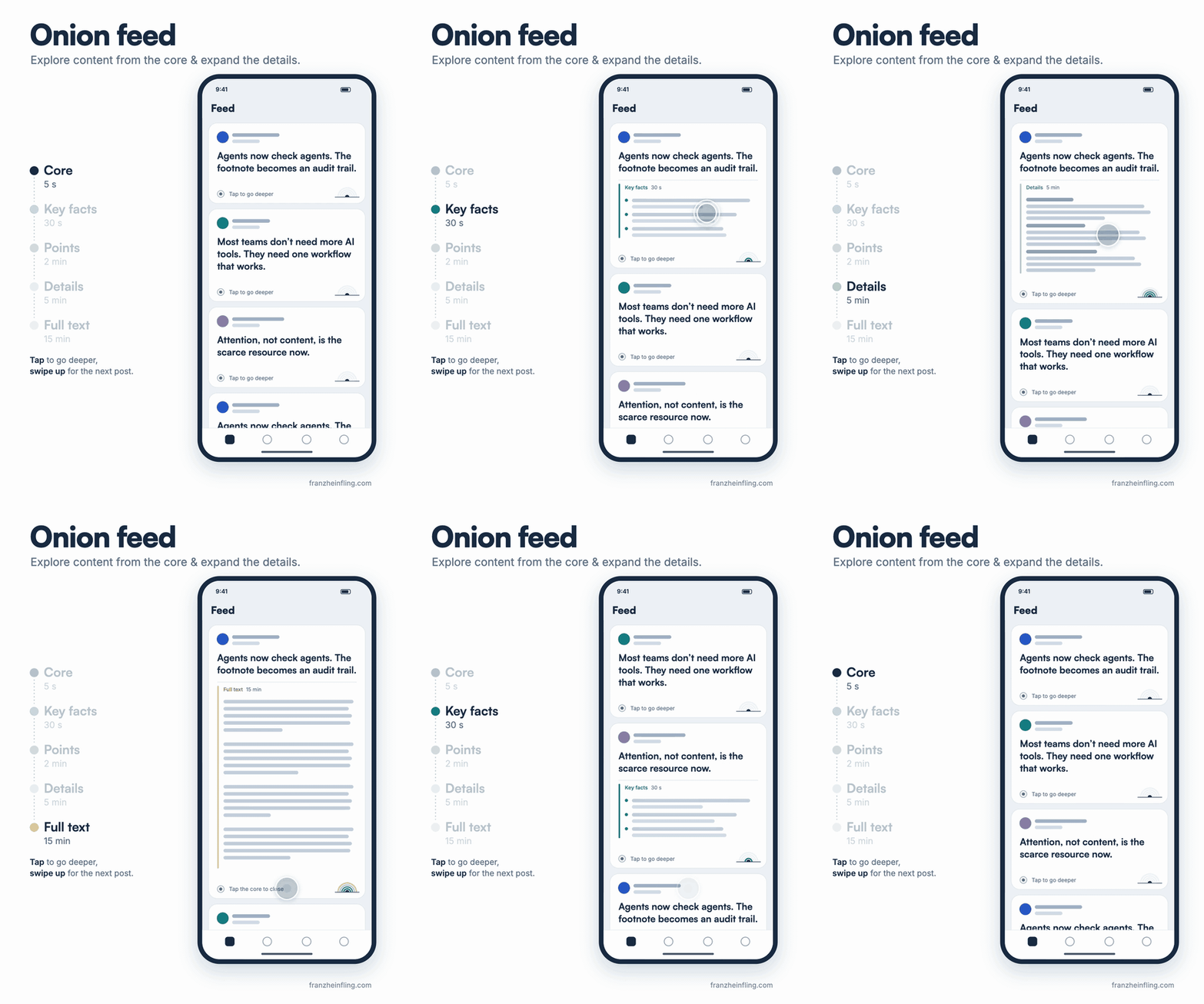
Feeds today just yell at you with noisy signals: they serve too much at once. A better feed would show me the core of each post first, let me deep dive when it matters, and take me all the way to expert level.
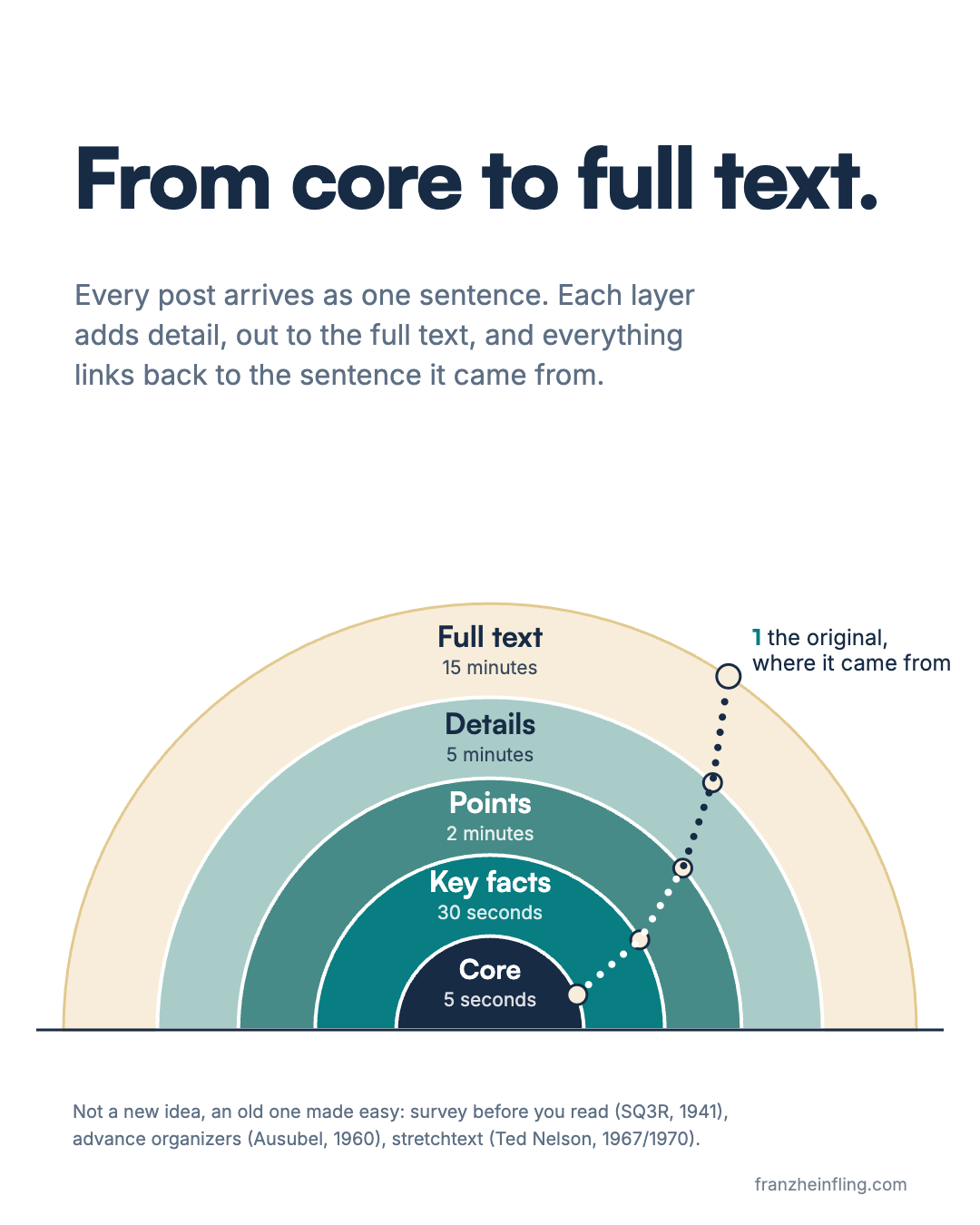
This can be built into almost anything. What you can use now: a small Claude skill that gives you any article or reading list as one sentence each, then deeper on request. It's open source, with examples to look at and a prompt for any chatbot: github.com/fheinfling/onion-skill.
For most companies, AI is that onion right now. New models every week, agents, tools, and a hundred posts spreading FOMO or telling you what you have to do right now. If your core business isn't software, you shouldn't have to eat the whole onion.
That's what I'm working on now: I, or someone from my team, join companies on a monthly subscription, do the deep dives to find what's worth doing, build the AI software and processes that move their numbers, and keep them running as models and tools change. If that sounds useful, send me a message.